
Generate a Motivation Letter
Generate a Motivation Letter
What: Motivation Letter is an AI generator in the Clinical Assistant panel that builds a persuasive clinical case to justify care, treatment, or funding.
Why: It searches the patient's entire timeline for supporting evidence, diagnoses, medication trials, lab trends, and clinical notes, so you don't have to assemble the case yourself.
When: Whenever you need to secure medical aid approval, chronic benefit registration, or a formal medical justification for another institution (e.g. a school).
Steps
1. Open the patient's file
Location: Calendar, Waiting Room, or patient search
Open the patient's file from your schedule, the Waiting Room, or the search bar. You can generate a Motivation Letter from the Patient Overview at any time, or from the Plan tab's 'Letters' section while a consultation is open, both use the same generator.
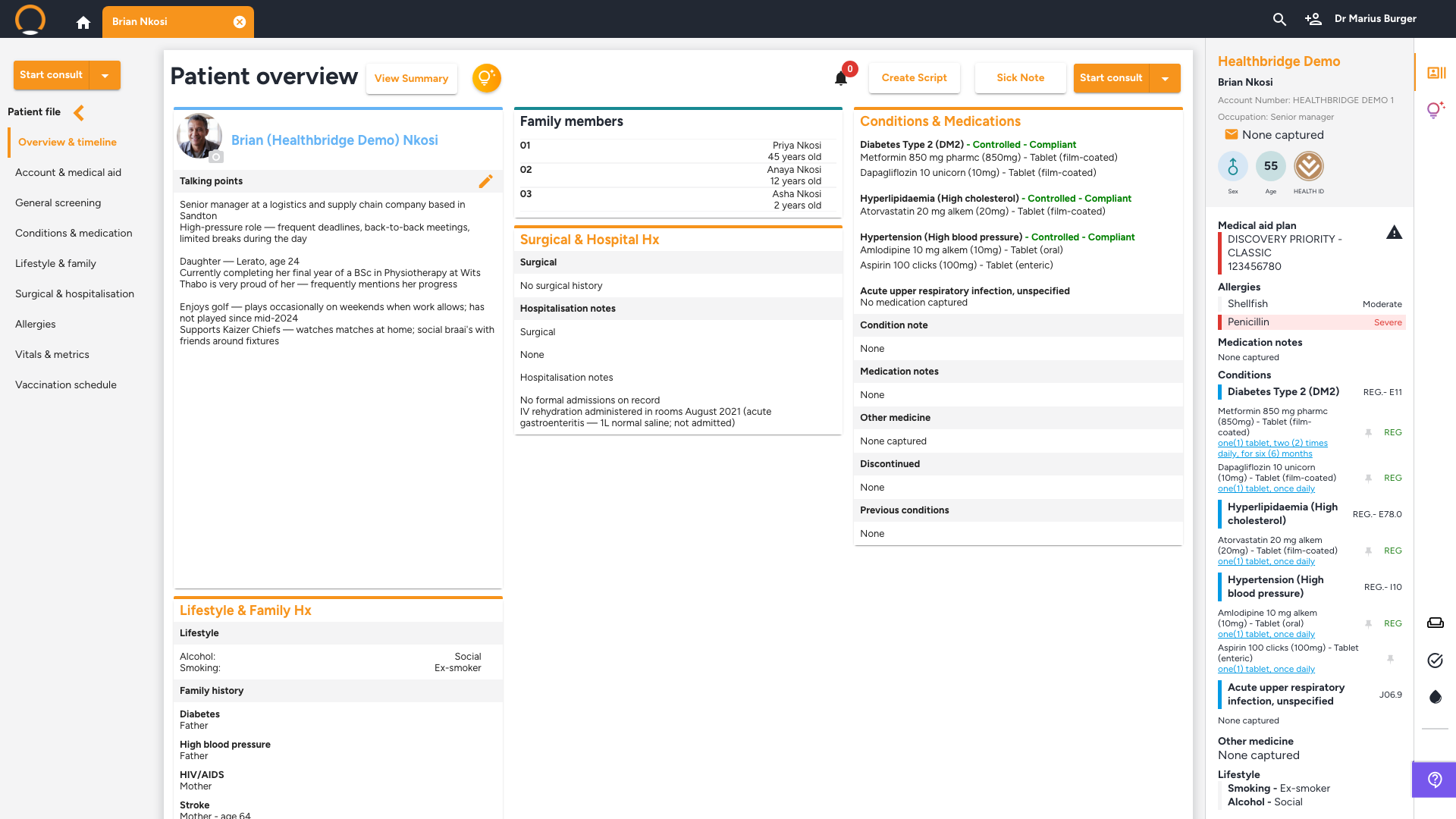
2. Open the Clinical Assistant panel
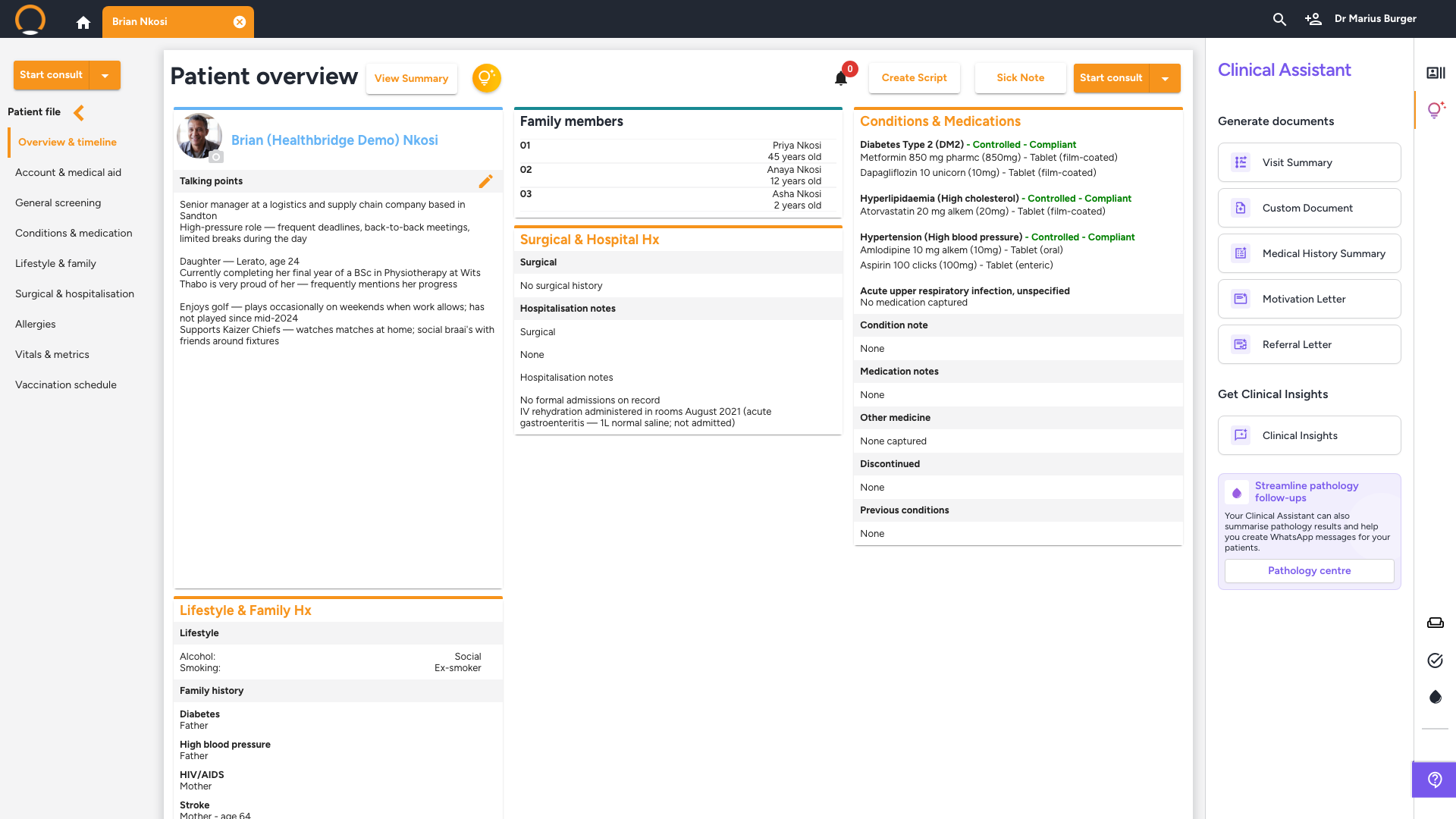
Location: Right sidebar
Click the Lightbulb icon in the right-hand sidebar. Under 'Generate documents', click 'Motivation Letter'.
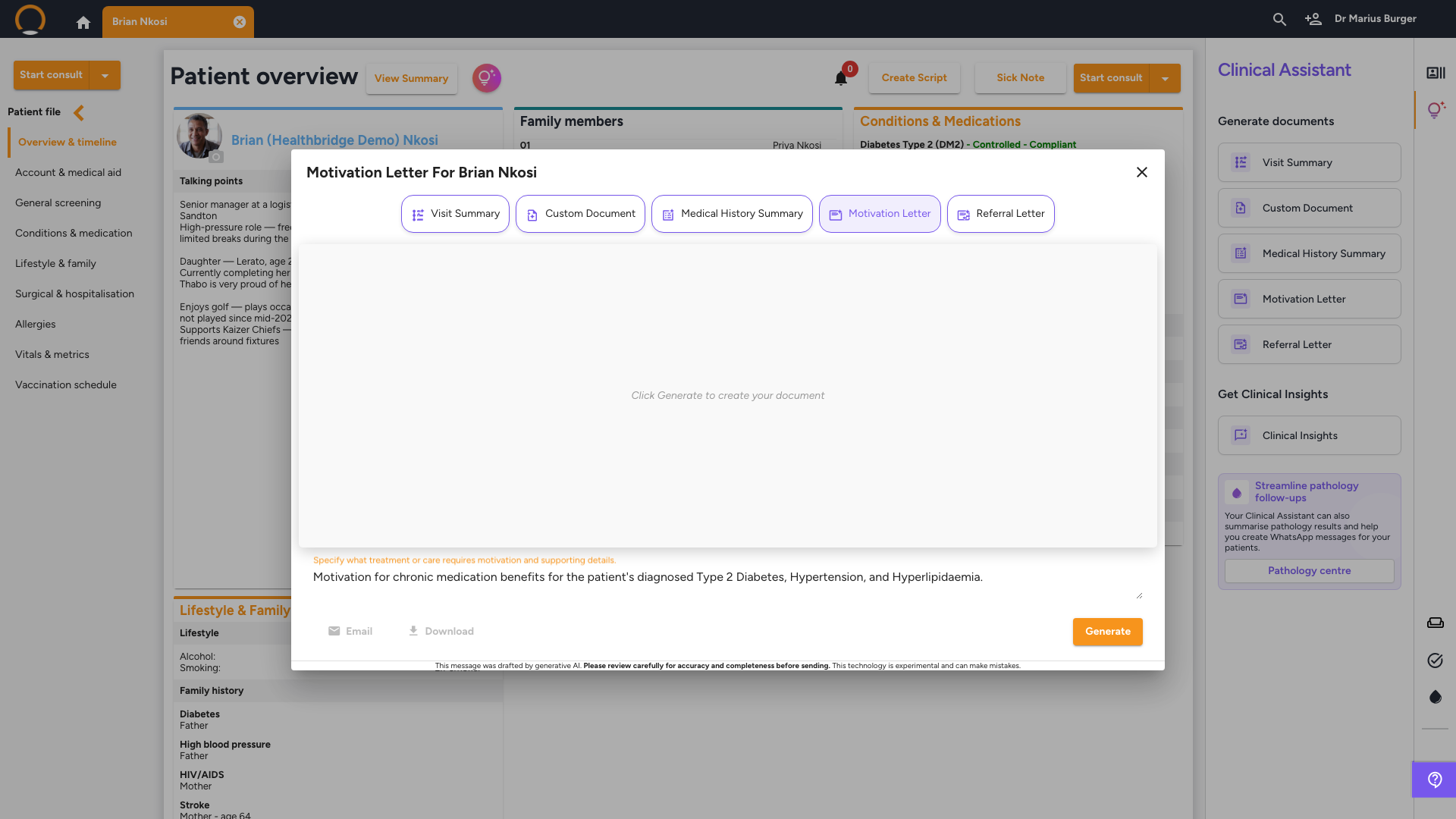
3. Specify what you're motivating for
Location: Motivation Letter dialog
A dialog titled 'Motivation Letter For [Patient name]' opens, with tabs across the top for all five document types. In the field labelled 'Specify what treatment or care requires motivation and supporting details', be clear and specific, this tells the AI exactly what clinical evidence to search for and include. For example:
- "Motivation for chronic medication benefits for the patient's diagnosed asthma."
- "A motivation letter to the medical aid to approve funding for a continuous glucose monitoring device."
- "Justify the need for an urgent MRI scan for suspected nerve compression based on recent symptoms."
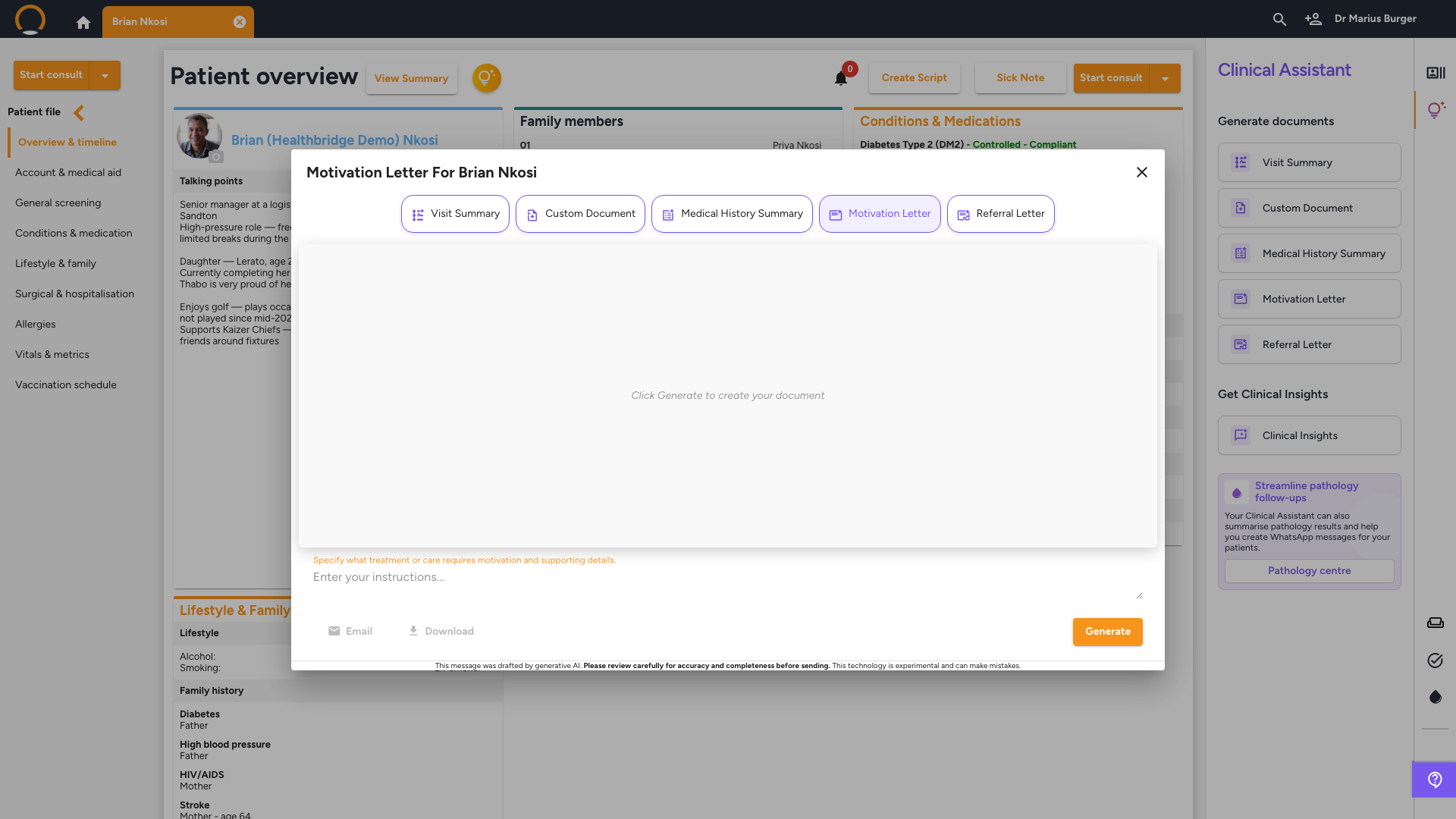
4. Click 'Generate'
Location: Motivation Letter dialog
Click the orange 'Generate' button. The AI builds a case by pulling relevant diagnoses, treatment history, and clinical notes from the patient's timeline that support your stated reason.
5. Review and share the letter
Location: Motivation Letter dialog
Read the draft for persuasiveness and completeness, it's structured with an introduction and a Medical Justification section citing specific diagnoses, ICD-10 codes, dates, and lab values. If it needs changes, add a follow-up instruction (e.g. "Include the results from the lab test on June 5th") and click 'Regenerate'. When you're satisfied:
- 'Copy to Letterhead', copy the document onto the practice letterhead template.
- 'Download', save it as a document to attach or print.
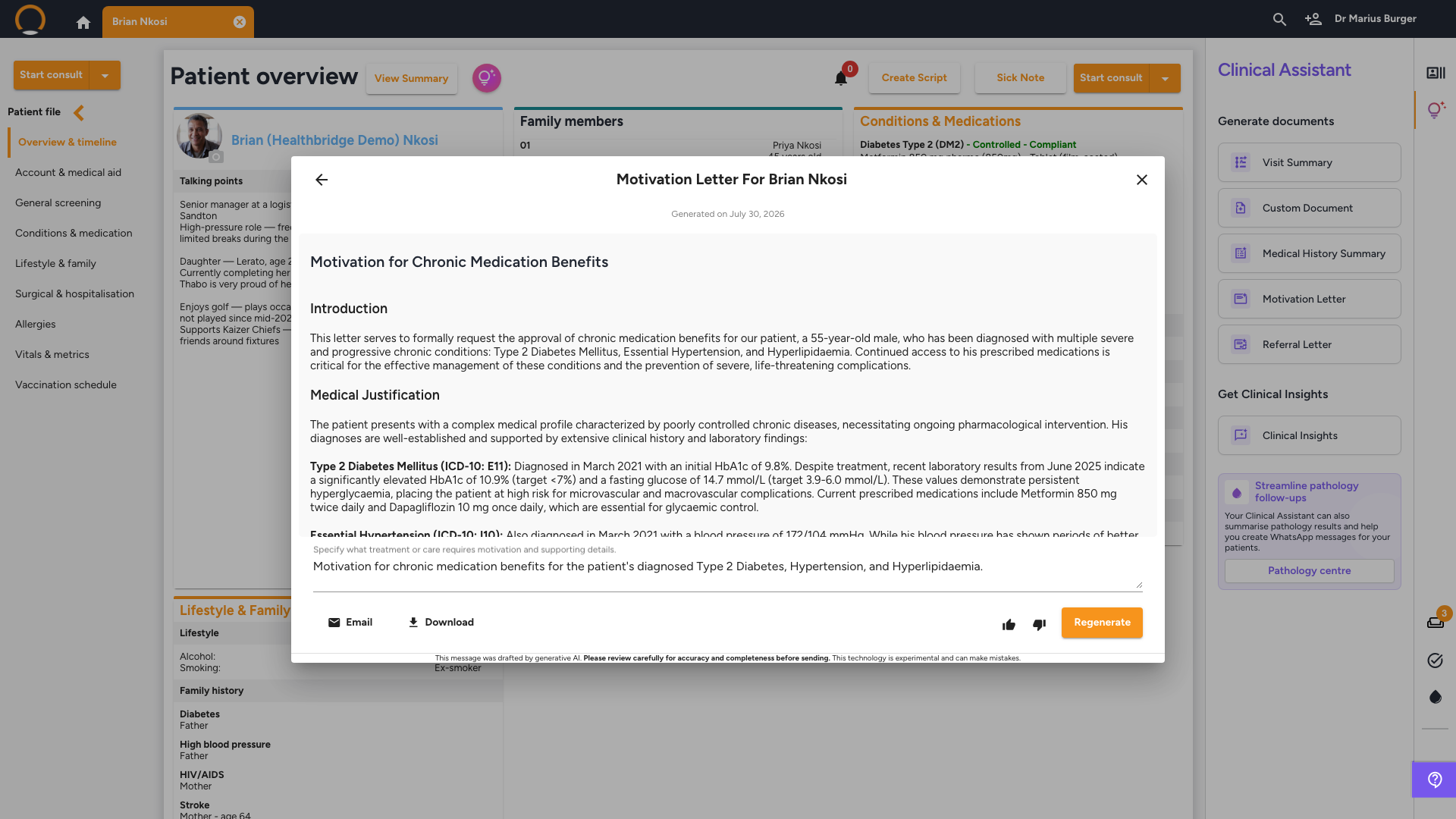
You should see: the letter is also saved automatically to the patient's timeline for future reference, you don't need to save it separately.
Advanced AI feature: The Clinical Assistant panel requires the Advanced AI subscription to be enabled on your account. If the panel doesn't load or the lightbulb icon is missing, your practice's Business Consultant can help activate it.
Frequently asked
Q: Can I use this for things other than medical aid approvals?
Yes. While it's perfect for motivating for chronic benefits or treatments from medical aids, you can also use it for a wide range of other purposes, such as writing letters to a school to justify accommodations for a patient (e.g. for ADHD) or for any other institution that requires a formal medical justification.
Q: How does the AI know what clinical evidence to include?
The AI's effectiveness depends on your instruction. When you provide a clear reason for the motivation (e.g. "Motivation for chronic medication for asthma"), the AI searches the entire patient timeline for relevant supporting evidence, such as related diagnoses, past treatment responses, and relevant clinical notes, to build the strongest possible case.
Q: What if I need to add specific details that aren't in the timeline?
The AI generates a comprehensive first draft, but you always have the final say. You can edit the text manually to add specific context or details, or use the instruction field to ask the AI to refine the letter with additional information before finalising it.