
Generate a Custom Document
Generate a Custom Document
What: Custom Document is a flexible, "do-anything" AI generator in the Clinical Assistant panel for documents that don't fit a standard referral, summary, or motivation template.
Why: It's directly integrated with the patient's clinical data, so it drafts unique letters and reports, school forms, airline letters, custom summaries, without you manually digging through the timeline.
When: Whenever you need a one-off document that the other four generators don't cover.
Steps
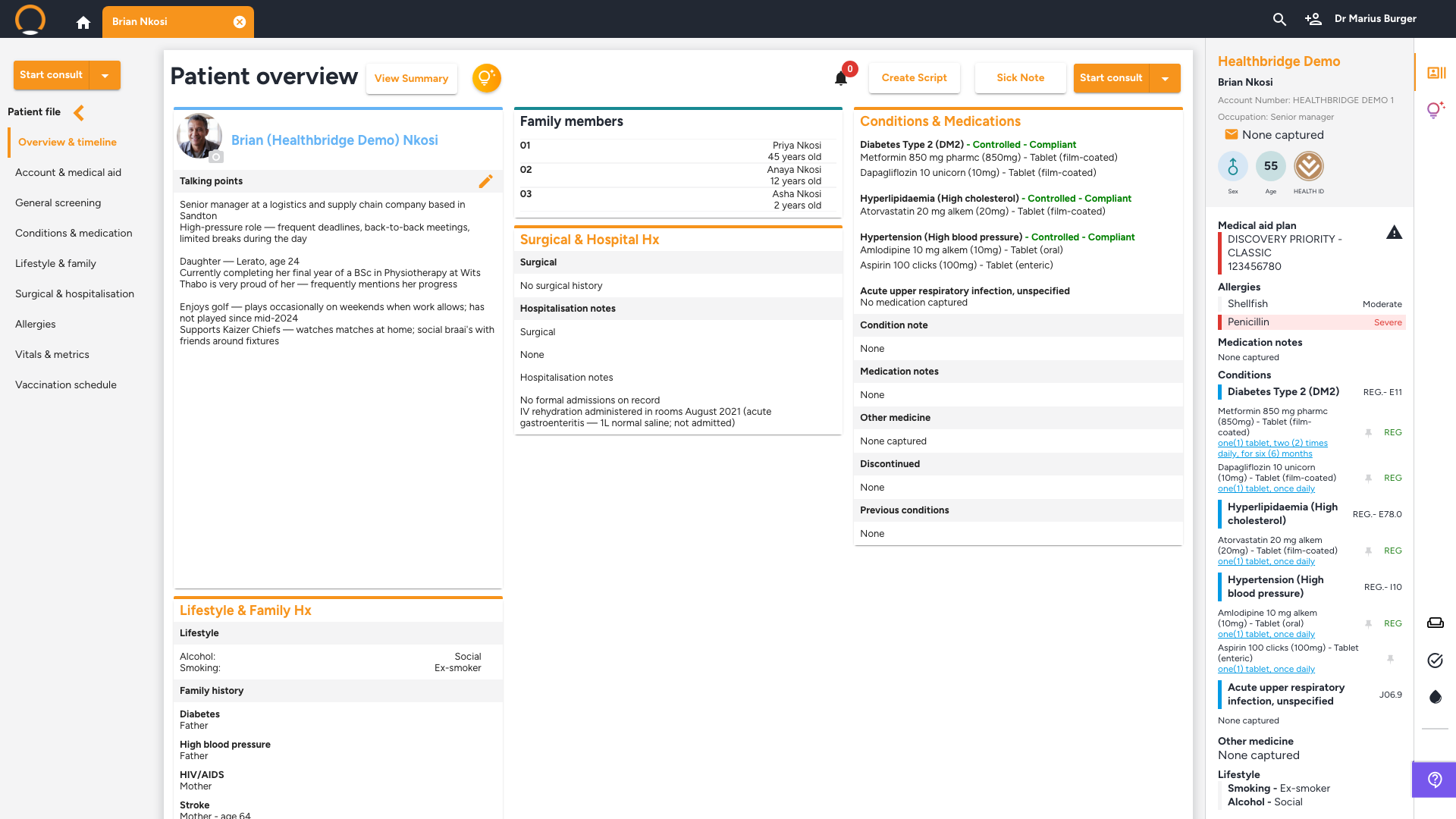
1. Open the patient's file
Location: Calendar, Waiting Room, or patient search
Open the patient's file from your schedule, the Waiting Room, or the search bar. You can generate a Custom Document from the Patient Overview at any time, or from the Plan tab's 'Letters' section while a consultation is open, both use the same generator.
2. Open the Clinical Assistant panel
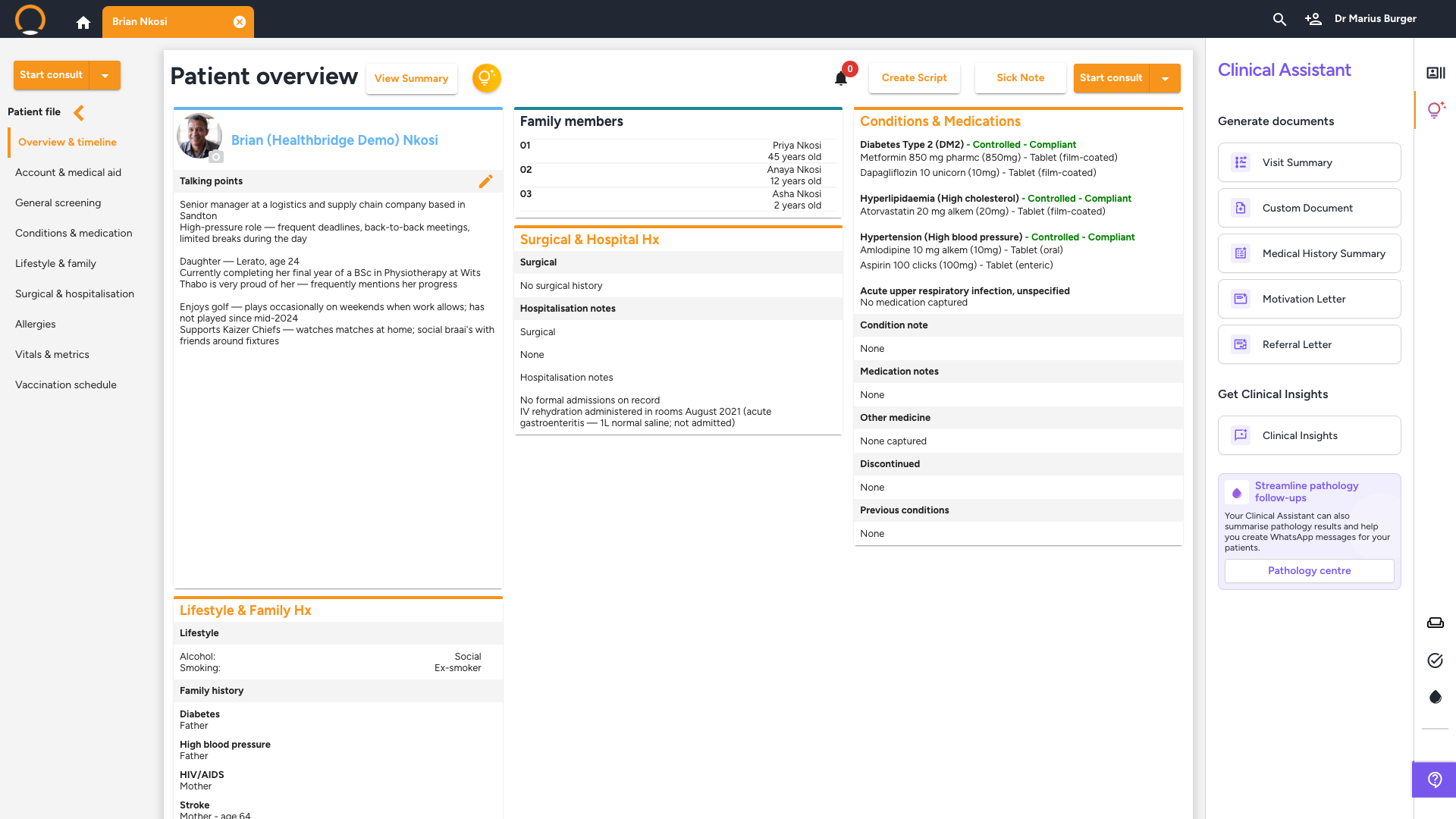
Location: Right sidebar
Click the Lightbulb icon in the right-hand sidebar. Under 'Generate documents', click 'Custom Document'.
3. Describe the document you need
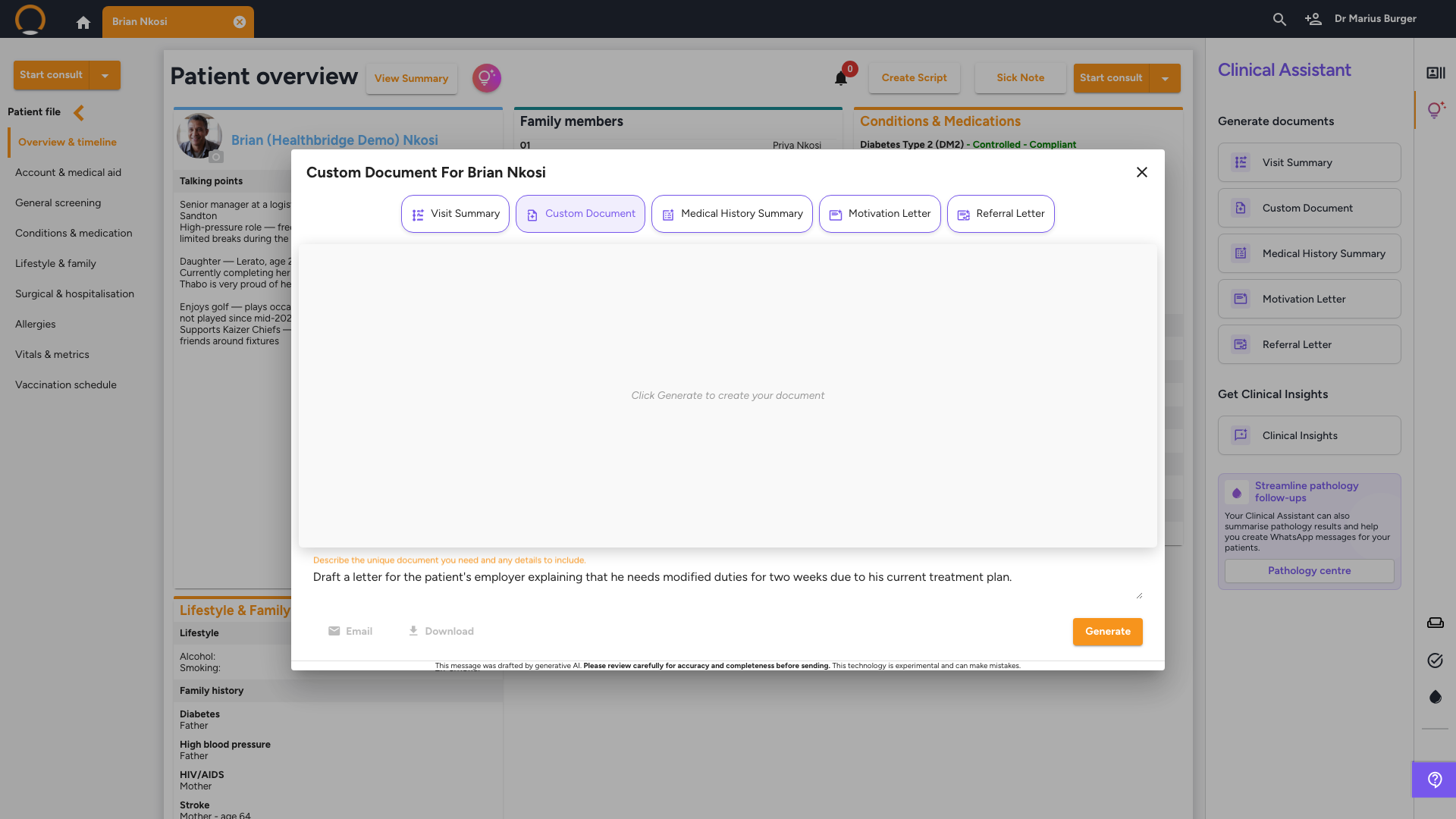
Location: Custom Document dialog
A dialog titled 'Custom Document For [Patient name]' opens, with tabs across the top for all five document types. In the field labelled 'Describe the unique document you need and any details to include', be clear and descriptive, think of it as instructing a personal assistant who already has access to the patient's file. For example:
- "Create a letter to the school explaining that the patient has ADHD and requires extra time for exams."
- "Draft a letter for the airline stating that the patient needs to travel with a portable oxygen concentrator for medical reasons."
- "Generate a summary of the patient's recent mental health consultations for their social worker."
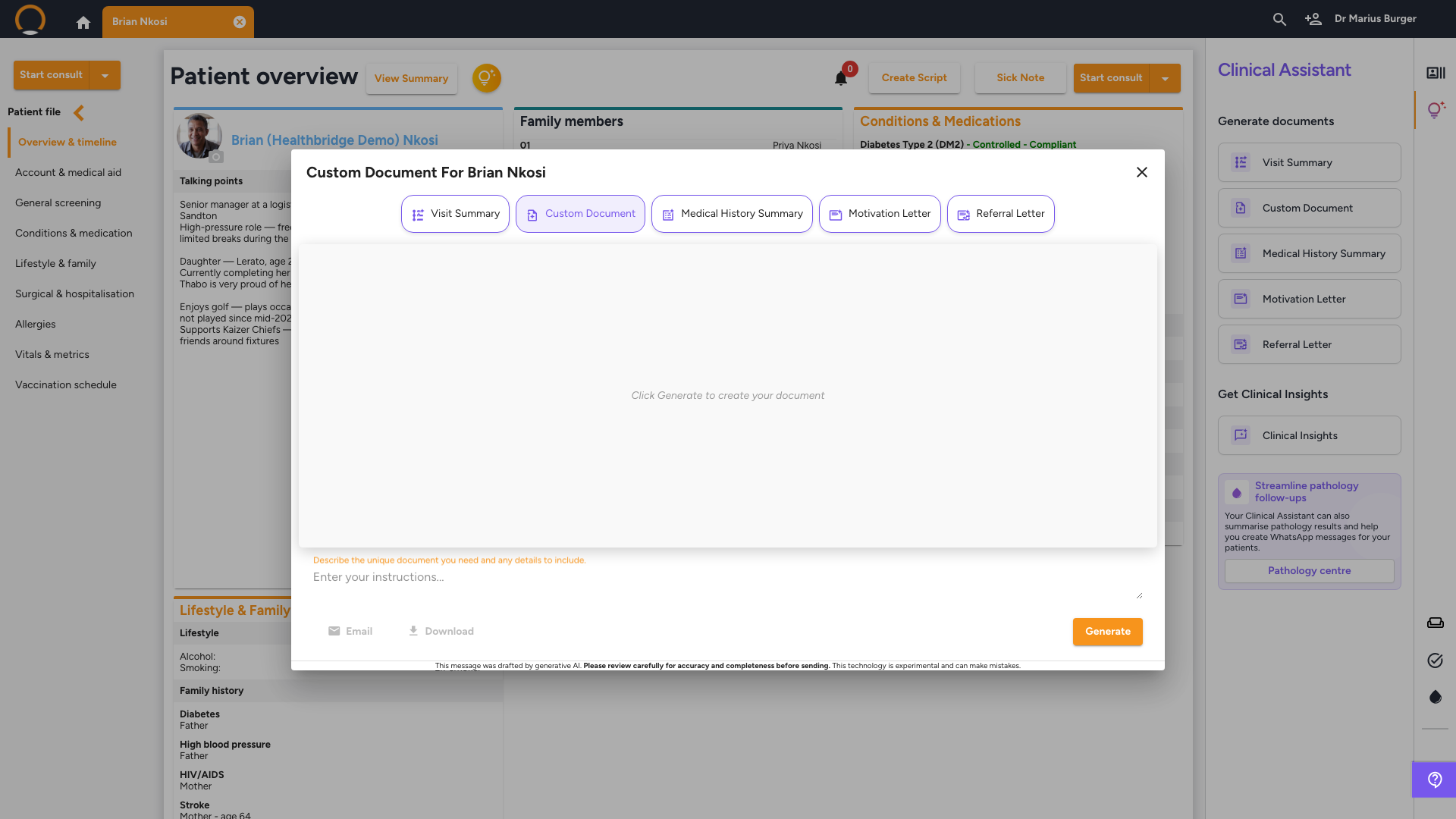
4. Click 'Generate'
Location: Custom Document dialog
Click the orange 'Generate' button. The AI drafts the document from your instructions, pulling relevant information from the patient's timeline to support your request.
5. Review and share the document
Location: Custom Document dialog
Read the draft for accuracy, tone, and completeness. If it needs changes, add a follow-up instruction (e.g. "Make the tone more formal" or "Include the dates of their last three visits") and click 'Regenerate'. Use the thumbs up/down icons to rate the result. When you're satisfied:
- 'Copy to Letterhead', copy the document onto the practice letterhead template.
- 'Download', save it as a document to attach or print.
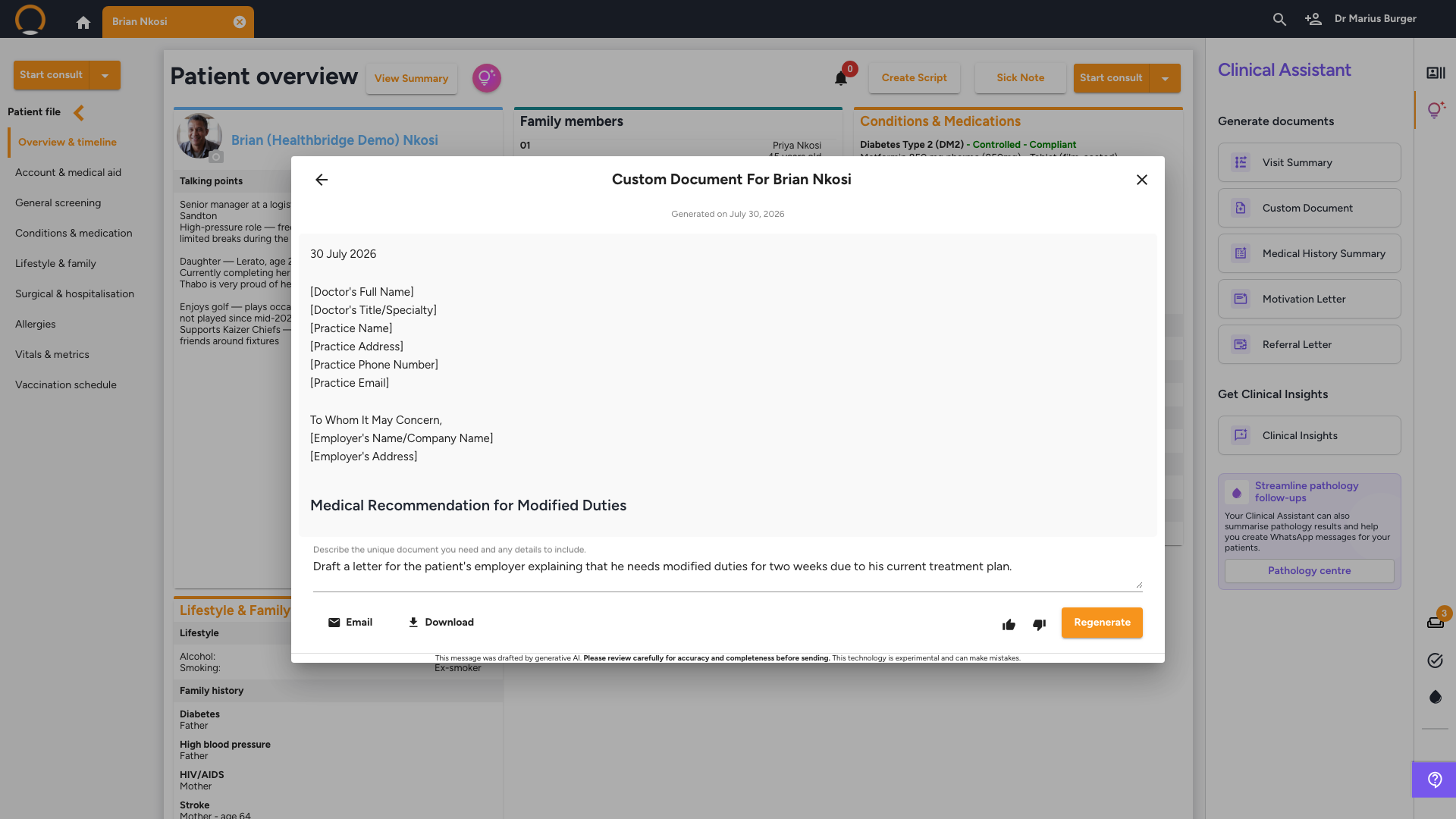
You should see: a formatted letter or document built from your instructions. Practice details appear as placeholders (e.g. '[Practice Name]') until your practice letterhead is configured, fill these in, or download and finish the document in your own letterhead.
Advanced AI feature: The Clinical Assistant panel requires the Advanced AI subscription to be enabled on your account. If the panel doesn't load or the lightbulb icon is missing, your practice's Business Consultant can help activate it.
Frequently asked
Q: What is the main purpose of the Custom Document tool?
This is your flexible "do-anything" tool for situations where standard templates for referrals or summaries don't apply. It's designed for creating unique documents like special school forms, airline letters, or custom reports for other institutions.
Q: How do I get the best results?
The quality of the output depends directly on the quality of your instruction. Be as clear and specific as possible about what the document is for and what information it needs to contain, think of it as giving instructions to a personal assistant who has access to the patient's file.
Q: Can I save a unique document I create to use again later?
Yes. Once you've generated a custom document you're happy with, you can save it as a custom template, useful for recurring, non-standard requests, since the template is then available for quick use in the future.
Q: How is this better than just writing a letter in a separate word processor?
This tool is directly integrated with the patient's clinical data. It saves you the effort of manually searching the timeline, finding relevant details, and copy-pasting them into a blank document, the AI does the data gathering and initial drafting based on your plain-language instructions.